Aesthetic Procedures

Q-Switch Laser: Pigmentation Treatment, Carbon Peeling and Tattoo Removal

A laser technology that targets specific pigments in the skin with very short, high-energy laser pulses.

Overview

The Q-Switch laser is a laser technology that targets specific pigments in the skin by producing very short, high-energy laser pulses.

Depending on the wavelength of the device and individual needs, Q-Switch lasers can be used for sun spots and some pigmentation problems, for carbon peeling and for tattoo removal.

The target of the laser light differs by application: melanin in pigmentation treatment, tattoo pigments in tattoo removal, while in carbon peeling a carbon solution applied to the skin surface is used together with the laser energy.

Since not every pigmentation problem or tattoo has the same characteristics, wavelength, energy, spot size and protocol must be determined individually.

How Does the Q-Switch Laser Work?

Q-Switch laser systems deliver energy to the target tissue in very short pulses.

In pigmented lesions the energy is absorbed by the pigment and breaks it into smaller particles, which are cleared over time by the body's natural mechanisms.

In tattoo removal the pigment particles in the tattoo ink are targeted in a similar way.

The wavelength used is one of the key factors determining which colours and pigments can be targeted more effectively.


Q-Switch Laser

Appointment

Wavelength, energy level, spot size and session intervals are determined individually during the consultation.

Appointment · +90 533 551 41 62

Applications

What Is the Q-Switch Laser Used For?

Depending on the individual's skin and the features of the device, the Q-Switch laser can be used for;

  • Sun spots,
  • Freckles,
  • Certain superficial pigmentation problems,
  • Selected melasma cases,
  • Uneven skin tone,
  • Carbon peeling,
  • Tattoo removal

can be used.

Not every brown spot is suitable for laser. A dermatological evaluation before treating any pigmented lesion with laser is therefore essential.

Pigmentation

01

Pigmentation Treatment With the Q-Switch Laser

Because Q-Switch lasers can target melanin pigment, they can be used for suitable pigmentation problems.

They can be considered as a treatment option especially for sun spots, freckles and some superficial pigmentation.

However, not every brown spot on the face is the same. Moles, melasma, sun spots and other pigmented lesions require different treatment approaches.

An accurate diagnosis of the lesion is therefore required before laser treatment.

02

Is the Q-Switch Laser Used for Melasma?

In selected melasma patients the Q-Switch laser can be included in the treatment plan with low-energy protocols.

However, melasma is a chronic pigmentation problem with a high tendency to recur, influenced by sun, hormones and genetic predisposition.

Laser is therefore rarely considered a stand-alone solution. An individual plan can be created together with sun protection, topical treatments, chemical peeling or other methods.

Karbon Peeling

01

What Is Carbon Peeling?

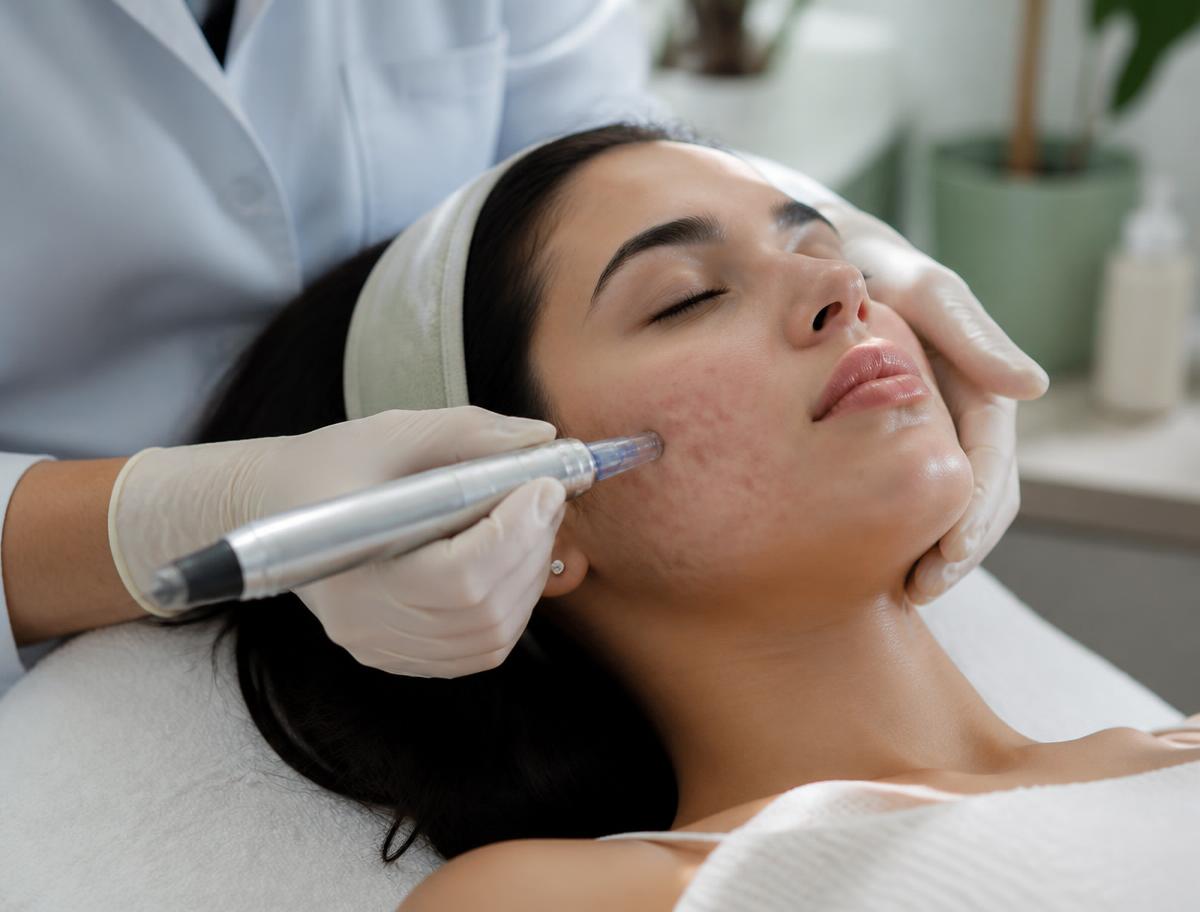
Carbon peeling is a skin care and renewal procedure performed with a Q-Switch laser after a thin carbon solution is applied to the skin surface.

The carbon particles settle on the skin surface and around the pores, and Q-Switch laser energy is then applied over these particles.

The treatment aims to cleanse the skin surface, balance oiliness, reduce the appearance of pores and support a fresher-looking complexion.

02

How Is Carbon Peeling Performed?

The skin is first cleansed and a thin layer of carbon solution is applied to the surface.

After a short wait for the carbon to settle, the area is scanned with the Q-Switch laser. The energy is absorbed by the carbon particles, which are removed from the skin surface during the procedure.

A mild warmth and small snapping sensation may be felt during the procedure.

03

Does the Skin Peel After Carbon Peeling?

Carbon peeling differs from classic chemical peels and usually does not cause noticeable peeling.

Mild redness may be seen afterwards, but most people can return to daily life quickly.

04

How Many Carbon Peeling Sessions Are Needed?

The number of sessions varies with the individual's skin and the goal of the treatment.

A fresher appearance may be noticed after a single session, while several sessions at intervals can be planned for oiliness, pores and skin texture goals.

Who Is Carbon Peeling Suitable For?

Carbon peeling can be considered especially for;

In people with active dermatological conditions, the existing condition must be evaluated first.

  • People with oily skin,
  • People with visible pores,
  • People whose skin looks dull and lifeless,
  • People who want a smoother-looking skin texture,
  • People with mild uneven skin tone

can be evaluated.

Tattoo Removal

01

Tattoo Removal With the Q-Switch Laser

Tattoo removal with the Q-Switch laser is based on targeting the pigment particles in the tattoo ink with very short laser pulses and breaking them into smaller fragments.

The fragmented pigments are gradually cleared over time by the body's natural elimination mechanisms.

The tattoo therefore does not disappear suddenly during the session; it fades gradually across sessions.

02

Which Tattoo Colours Can the Q-Switch Laser Remove?

The way tattoo pigments absorb laser energy differs by colour.

Black and dark-coloured tattoos in particular usually respond better to suitable Q-Switch wavelengths.

Colours such as red, orange, yellow, green and blue may require different wavelengths and the response can be variable.

For coloured tattoos it is therefore important which wavelengths the laser system offers.

03

Why Are Tattoo Removal Sessions Spaced Apart?

The laser fragments the pigment, but clearing those fragments from the body takes time.

The skin also needs to heal before the next session, so leaving enough time between sessions is important.

The interval is determined according to the tattoo and the individual's skin characteristics.

Tattoo Removal

How Many Sessions Does Tattoo Removal Take?

There is no standard number of sessions that applies to everyone.

The number of sessions required can be affected by;

  • The colour of the tattoo
  • The composition of the pigment used
  • Pigment density
  • Whether the tattoo is professional or amateur
  • The age of the tattoo
  • The area where the tattoo is located
  • The laser and wavelength used
  • The person's immune system and individual response

may all play a role.

Tattoo removal usually requires multiple sessions and progresses over months.

What Happens After Tattoo Removal?

Immediately after the laser a temporary whitening (frosting) may appear over the tattoo, followed by redness, mild swelling, tenderness, crusting or, in some people, small blisters.

During Recovery

  • Keeping the area clean,
  • Not picking the crusts,
  • Protecting it from the sun,
  • Following the wound care recommended by the physician

Frequently Asked Questions About the Q-Switch Laser

Q-Switch Laser Treatment Is Planned Individually

The Q-Switch laser is not a single-purpose device. The targeted structure and the parameters differ between pigmentation treatment, carbon peeling and tattoo removal.

In pigmentation treatment the diagnosis must be made first; in tattoo removal the tattoo's colour, pigment density, skin type and laser wavelength must be evaluated together.

Wavelength, energy level, spot size and session intervals are determined according to individual needs.

Can the Q-Switch laser be used on every spot?+

No. Not every brown spot should be treated with laser. The lesion must first be diagnosed dermatologically. Treating suspicious pigmented lesions with laser before diagnosis is not appropriate.

Can the Q-Switch laser be used on moles?+

Whether a pigmented lesion is a mole and whether it is suitable for laser must be assessed dermatologically. Removing moles with laser indiscriminately is not correct.

Does the Q-Switch laser thin the skin?+

When performed with appropriate parameters, the aim is not to thin the skin. The laser targets pigment or carbon particles depending on the application.

Are carbon peeling and chemical peeling the same?+

No. Carbon peeling is performed with a laser, whereas chemical peeling creates controlled renewal using acid or chemical solutions.

Does carbon peeling remove pores completely?+

No. Pores are a natural part of the skin and cannot be eliminated. In suitable people carbon peeling can aim to make them look less noticeable.

Does the Q-Switch laser remove a tattoo completely?+

Complete, scar-free removal cannot be guaranteed for every tattoo. The outcome depends on the pigment's colour, density and depth, the technique used and the individual response.

Does tattoo removal leave a scar?+

With a suitable laser and correct parameters the aim is to target the tattoo pigment with as little damage as possible to surrounding tissue. Nevertheless, complications such as colour change, crusting and rarely permanent scarring can occur. Scars formed when the tattoo was made may also become more visible as the pigment fades.

Is tattoo removal painful?+

A brief stinging and burning sensation similar to a rubber band snap may be felt. A topical anaesthetic cream can be used beforehand.

Can you go in the sun after tattoo removal?+

Protecting the treated area from the sun is important. Intense sun exposure, especially right after the procedure, can increase the risk of pigmentation changes.